
The Household Items People End Up Weirdly Attached To
The items people grow most attached to at home rarely cost the most. The attachment follows a specific pattern—and understanding it changes how you shop.
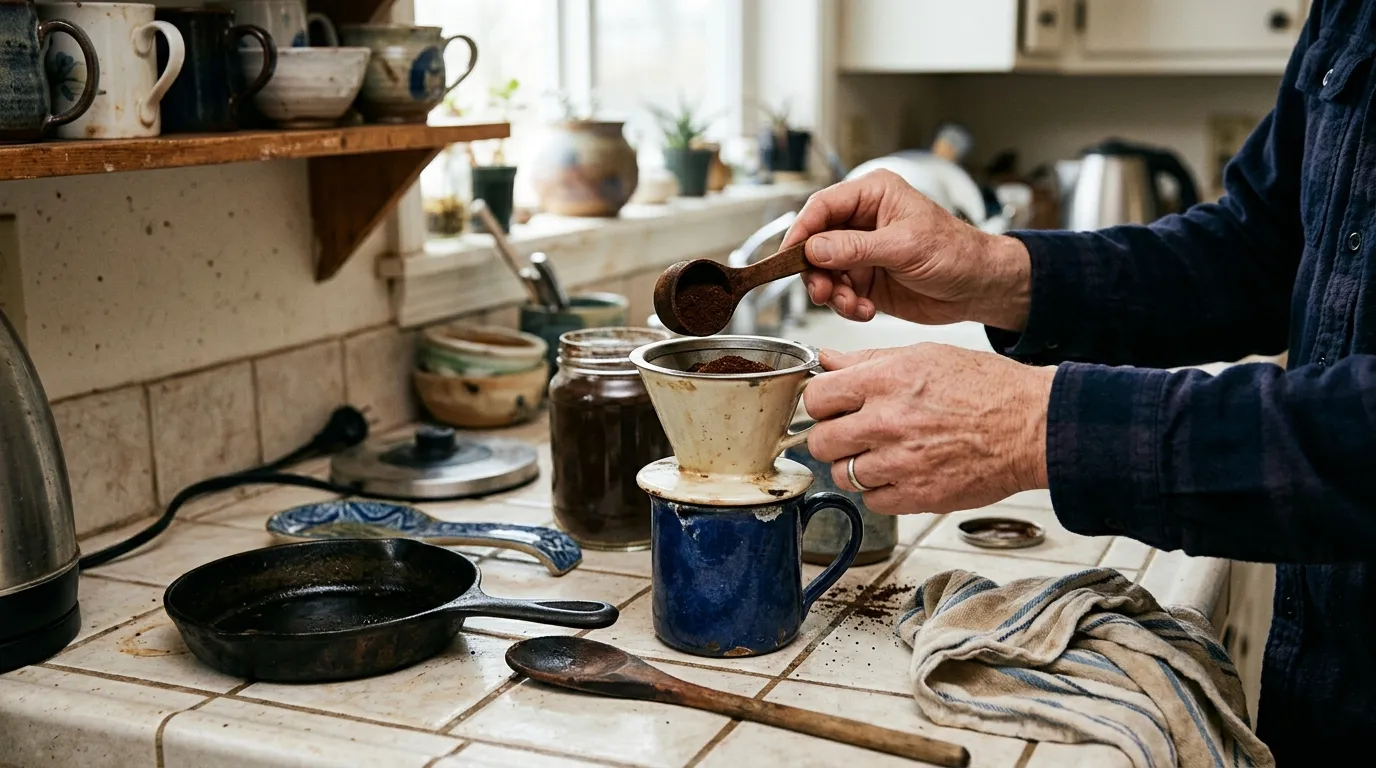
A ceramic mug that came free with a coffee subscription. A worn wooden spoon that predates three apartments. A particular lamp bought at a thrift store for eleven dollars that, for some reason, has survived every round of decluttering. People keep these things and quietly know they're going to keep them, even as they're unsure why.
The attachment isn't random. It follows a pattern that has less to do with the object's quality and more to do with the role it plays in daily routine, the circumstances of its acquisition, and the particular texture of how it shows use over time. Understanding that pattern is actually useful, because it changes how you evaluate purchases before you make them—not after.
The tension: the items people end up most attached to are rarely the ones they expected to care about when they bought them. The deliberate investment piece, chosen carefully and expensively, often gets replaced. The accidental thing stays.
What Actually Creates the Attachment
Repeated use in a specific ritual context is the most reliable predictor. The mug becomes the mug because it's always the one you reach for at 6 AM before you're fully awake—not because it's beautiful or expensive. Behavioral economists have a term for this: the endowment effect, where ownership increases perceived value. But it's stronger than that. The effect compounds when the object is embedded in a repeated sequence of actions that marks the beginning or end of something: a morning, a workday, a meal.
The wooden spoon stays because it performs. It's the right weight, the right length, and it hasn't cracked. Those are functional facts, but they've been verified by ten thousand repetitions, which transforms functional competence into something that feels like reliability. You trust it. That framing misses something. It's not just trust in the object—it's that the object has become a minor anchor for a habitual self. Throwing it away feels slightly like erasing evidence of continuity.
Acquisition story matters more than most people acknowledge. Objects obtained through unusual circumstances—found, gifted unexpectedly, bought impulsively on a trip, inherited—carry more attachment weight than objects selected through a normal shopping process. The acquisition story is retrievable: you remember it. Objects bought after careful deliberation were optimized for specs, and the story is less interesting to retrieve.
Why the Expensive Piece Usually Loses
The deliberate investment piece—the nice knife set, the designer throw, the coffee table chosen after two months of research—often doesn't win the attachment competition. There are a few reasons for this.
First, high-expectation purchases carry performance pressure. You noticed the knife set. You justified it. Now every time you use it, you're partly evaluating whether it was worth it. That evaluative stance is the opposite of the unselfconscious ease that generates attachment. You can't be lost in routine with an object you're still auditing.
Second, expensive objects often get treated more carefully, which limits the accumulation of use-evidence. You hand-wash the good knife. You don't put the nice bowl in the dishwasher. That carefulness prevents the patina, the small scratches, the worn handle that signals the object has been through something with you.
Third, the specs that justified the expensive purchase can become obsolete. A better version exists. The attachment never formed solidly enough to survive the comparison.
The cheap or accidental object doesn't have any of these problems. No performance pressure, no carefulness that limits contact, no specs to be surpassed. It just gets used until it's trusted.
What This Tells You About Buying Things
The practical implication is not to buy cheap things. It's to buy things that can develop use-evidence: objects with materials that age rather than degrade, with a functional fit for your actual routine rather than an aspirational one, and with enough simplicity that they don't require management.
Cast iron cookware develops attachment reliably because it builds a physical record of use (the seasoning layer) that is literally created by your cooking. A nonstick pan degrades and gets replaced. A well-made ceramic or wooden object shows wear in a way that reads as history rather than damage. These aren't aesthetic preferences—they're functional properties that determine whether an object can accumulate the kind of use-record that generates attachment.
What to check before you buy: Will you use this in a repeated daily or weekly routine? Does the material age in a way that shows use rather than just degrading? Is it simple enough to use without thinking? If yes to all three, you've bought something you might keep for twenty years. If the answer to any is no, you've bought something you'll replace.
Not every object needs to generate deep attachment. Plenty of household items are pure utility and should be replaced when they fail. But knowing the difference—and buying accordingly—means spending less over time and accumulating less stuff that you don't actually care about.
The Objects Worth Keeping (and the Ones Worth Releasing)
The reliable test for whether to keep something you're on the fence about isn't whether you use it. It's whether you would notice if it were gone. Not the anxiety of losing a useful tool—but the specific sense that something familiar had been removed. That feeling maps directly onto actual attachment, and it's a more honest signal than frequency-of-use.
Objects worth keeping: the ones that have survived multiple rounds of decluttering without you making a conscious decision to keep them. Those objects have already passed the test. They have enough passive attachment weight that they didn't get questioned. Respect that.
Objects worth releasing: the ones you're keeping out of guilt about the original price, or because you might use them someday. Those are different categories entirely. Guilt-keeping is a pain, and the someday-object almost never becomes a trusted-object.
The weird attachments people form aren't sentimental weakness. They're information about which objects have successfully embedded themselves into a life. That's the goal of every object in your home—to become invisible through use, to perform reliably enough that you stop thinking about it. The things that achieve that are the ones worth keeping.